
HBL Engineering Annual Report 25: Deep Dive into India's Niche Defence & Railway Technology Company
focusing on niche markets that are "too small for big companies and too difficult for small companies."

Introduction
HBL Engineering has carved out a unique position in India's defense and railway sectors by focusing on niche markets that are "too small for big companies and too difficult for small companies." After going through their Annual Report 25, it's clear that the chairman's message contains valuable insights about the company's strategic direction and competitive advantages.
Company Overview: Three Strategic Pillars
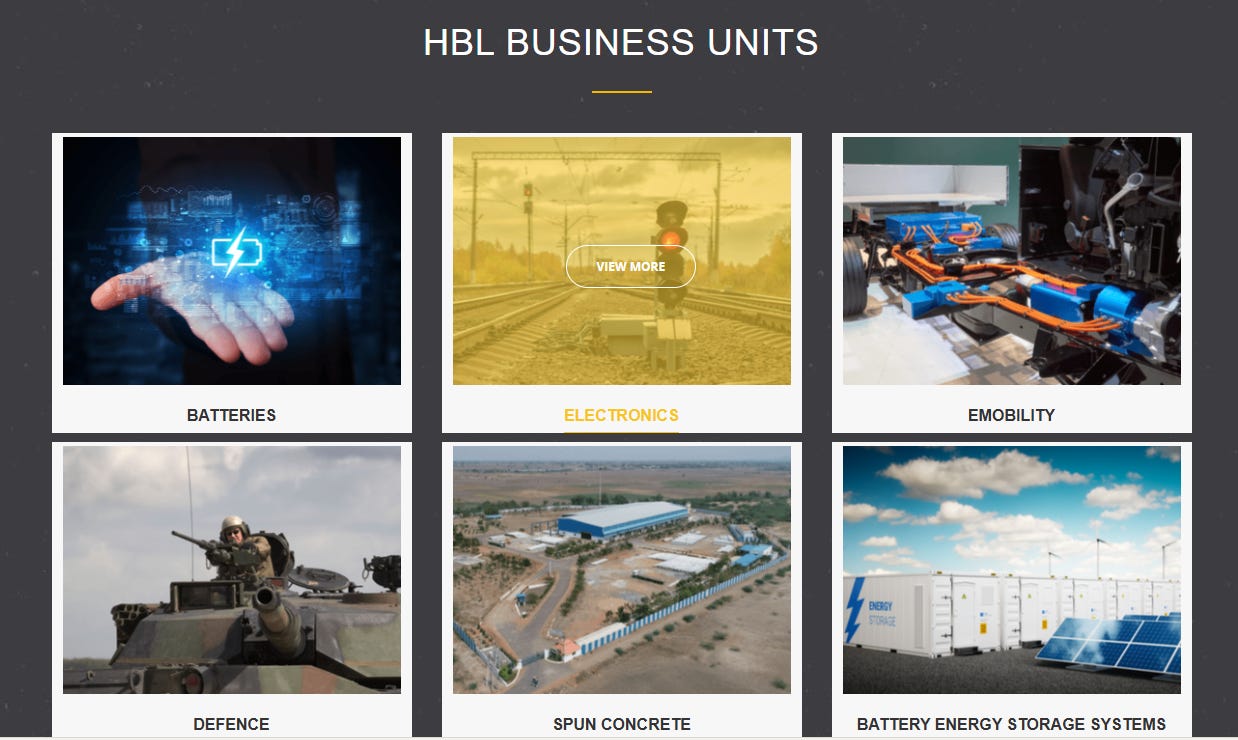
HBL Engineering operates through three core divisions that collectively position the company at the intersection of India's defense modernization and railway infrastructure development:
1. Industrial Batteries Division
Lead Batteries (VRLA & PLT)
Nickel Cadmium batteries
Lithium Batteries for specialized applications
2. Defense Segment
Military Batteries for aircraft, missiles, torpedos, and submarines
Electronic Fuzes for ammunition systems
3. Industrial Electronics
Rail Signaling systems
Kavach automatic train protection system
Train Management Systems (TMS)
Electric Drive Trains
The Winning Business Model
HBL's strategic approach is brilliantly simple yet effective: target niche markets that fall into the sweet spot where they're too specialized and small for large corporations to prioritize, yet too technically complex for smaller players to execute successfully.
This positioning has allowed HBL to establish strong competitive moats in highly specialized segments with limited competition.
Growth Drivers & Market Outlook
Kavach: The Railway Safety Revolution
Kavach, India's automatic train protection system, represents HBL's most significant growth opportunity:
Market Leadership: HBL was the first Kavach OEM to successfully demonstrate the new system's functionality
Contract Wins: Secured contracts worth ₹4,000 crores
Technical Edge: First to obtain Kavach 4.0 certification
Long-term Visibility: Sales expected to remain steady until FY28
Market Scope: Covering India's entire rail network will take much more than 5 years, ensuring sustained demand
The company is also investing heavily in R&D for rail signaling technologies, with many projects kept confidential to minimize competitive imitation risks.
Train Management Systems (TMS): Early Stage, High Potential
TMS represents another growth vector with significant runway:
Market Position: HBL has installed 4 out of 6 total TMS systems in India (the other 2 by Bombardier and Alstom)
Market Penetration: Currently covers only 2% of Indian Railways' network
Growth Trajectory: Expected to grow steadily
Contract Value: While smaller than Kavach, offers consistent revenue streams
Electronic Fuzes: Defense Indigenization Champion
HBL holds a unique position in India's defense sector:
100% Indigenization: Only company in India with complete indigenous capability
Product Range: Developed and obtained approvals for fuzes in grenades, artillery shells, rockets, missiles, and air-dropped bombs
Revenue Contribution: Currently the single largest contributor to the defense segment's revenues
Growth Projection: Expected to become the second-largest business by FY30
Lithium-Ion Batteries (LIB)
The lithium battery division showcases HBL's forward-thinking approach:
Investment Plan: CapEx of ₹100 crores in CY25 for high-energy density cell production
Positive Outlook: Management acknowledges they can produce Li cells at lower costs than imports plus customs duty
Strategic Application: HBL electric trucks will use HBL-manufactured batteries, ensuring captive demand
Market Focus: Targeting niche, high-margin industrial segments rather than mass market applications
PLT (Pasted Lead Tubular) batteries
Consultants recommend pure Lead Thin Plate (PLT) batteries for their high-rate discharge performance, long life, and superior safety compared to lithium-ion batteries
Indian Defence has begun deploying PLT batteries in battle tanks, artillery guns, and heavy military trucks
Export opportunities for PLT batteries in Western battle tanks are expanding significantly
Vande Bharat BESS: Next-Generation Railway Technology
HBL is positioning itself for the future of Indian railways:
Technology Integration: New Vande Bharat rail coach systems will be equipped with HBL's Battery Energy Storage Systems using lithium-ion technology
Market Timing: Perfectly aligned with Indian Railways' modernization drive
Key Summary
Kavach: Steady contribution through FY28 with potential for extension
TMS: Consistent growth as railway digitization accelerates
Electronic Fuzes: Projected to become second-largest business by FY30
Lithium Batteries: Focus on niche, high-margin industrial applications
R&D Pipeline: Multiple projects in development for strategic launch timing
Conclusion
HBL Engineering presents a compelling investment narrative built on strategic positioning in high-growth, niche markets. The company's three-pillar approach across industrial batteries, defense, and railway electronics provides diversification while maintaining focus on core competencies.
The multi-year revenue visibility from Kavach contracts, combined with the defense indigenization drive and railway modernization trends, creates a favorable operating environment. Management's realistic approach to lithium battery manufacturing and focus on value-added applications rather than cost competition demonstrates strategic maturity.
DISCLAIMER
This analysis is based on insights from HBL Engineering's Annual Report 25. Investors should conduct their own due diligence and consider consulting with financial advisors before making investment decisions.